Pick up on what genuinely intrigues you
In what this person tells you, what makes you want to know more? A taste you share, a way of life different from yours, an opinion that surprises you. Start from that detail and say what it brings to mind for you.
If they talk about enjoying going to the cinema alone, here is one possible reply:
“Going to the cinema on my own? Same here. I love walking out of a screening and keeping the film to myself for a bit before talking about it.”
From there, you might talk about a film that stayed with you, the pleasure of going out alone, or head somewhere unexpected. You’ve shared something personal without asking a question. The other person has room to respond in their own way.
Share something about yourself too
A conversation can start with “how’s it going?”. It becomes more personal when each of you brings a preference, a memory or a wish of your own. If you stick to reporting on your days, you can talk for a long time without really discovering each other.
What you enjoy, and why
Love having people over? Say what you enjoy about it: spending hours cooking a dinner, improvising with whatever’s left, watching your guests end up in the kitchen. It gives the other person an idea of a moment you could share.
A light topic can say a lot. Disagreeing about a film, a slightly absurd wish or a habit you fully own can give you something to laugh about and help you get to know each other. There’s no need to make every exchange deep. Let a topic run as long as it interests you both, without looking for a new question in every message.
You choose what you share
Talking about yourself doesn’t mean telling them straight away about your past relationships, your family or everything on your mind. Some topics may come up later, others will stay private.
When it comes to what you’re looking for, a few clear words are better than an answer meant to please. You’re looking for a relationship, you’d like to get to know each other first, you’re still unsure: say what’s true today. The other person can then say what they want, without having to guess what you want.
Find a pace that suits you both
A quick reply doesn’t tell you everything about someone’s interest. Neither does a late one. Look instead at how the conversation carries on: what they pick up on, what they bring, and how much room they leave for what you share.
Share a concrete preference
Maybe you prefer a few thoughtful messages to a constant back-and-forth. Or spontaneous exchanges, without having to craft a long reply. Express this preference simply, without turning it into a rule for the other person.
For example: “I like taking my time to reply to you. Long chats over text aren’t really my thing. What about you, what do you prefer?”
Their answer can help you adjust to each other. It can also reveal a mismatch. Neither of you has to promise a pace you don’t want to keep.
Leave the other person their share of the conversation
If you’re the one asking all the questions and always picking things back up, you don’t have to keep finding a new topic. The other person may have a different way of taking part. Give them the chance to suggest something too.
A good conversation isn’t measured by an equal number of messages. What each of you wants to bring to it counts too. And when it’s all your conversations together that weigh on you, cutting back on the apps becomes a different question.
When you both want to meet
Taking your time also leaves room to meet quickly if you both want to. There’s no need to drag out the messages just because a date would seem “too soon”.
A suggestion can come out of your conversation: carrying on a discussion over a coffee, for example. The other person can accept, suggest another time or prefer to keep chatting. You’ll find examples of how to ask for a first date in our guide to that step.
Room for conversations on 
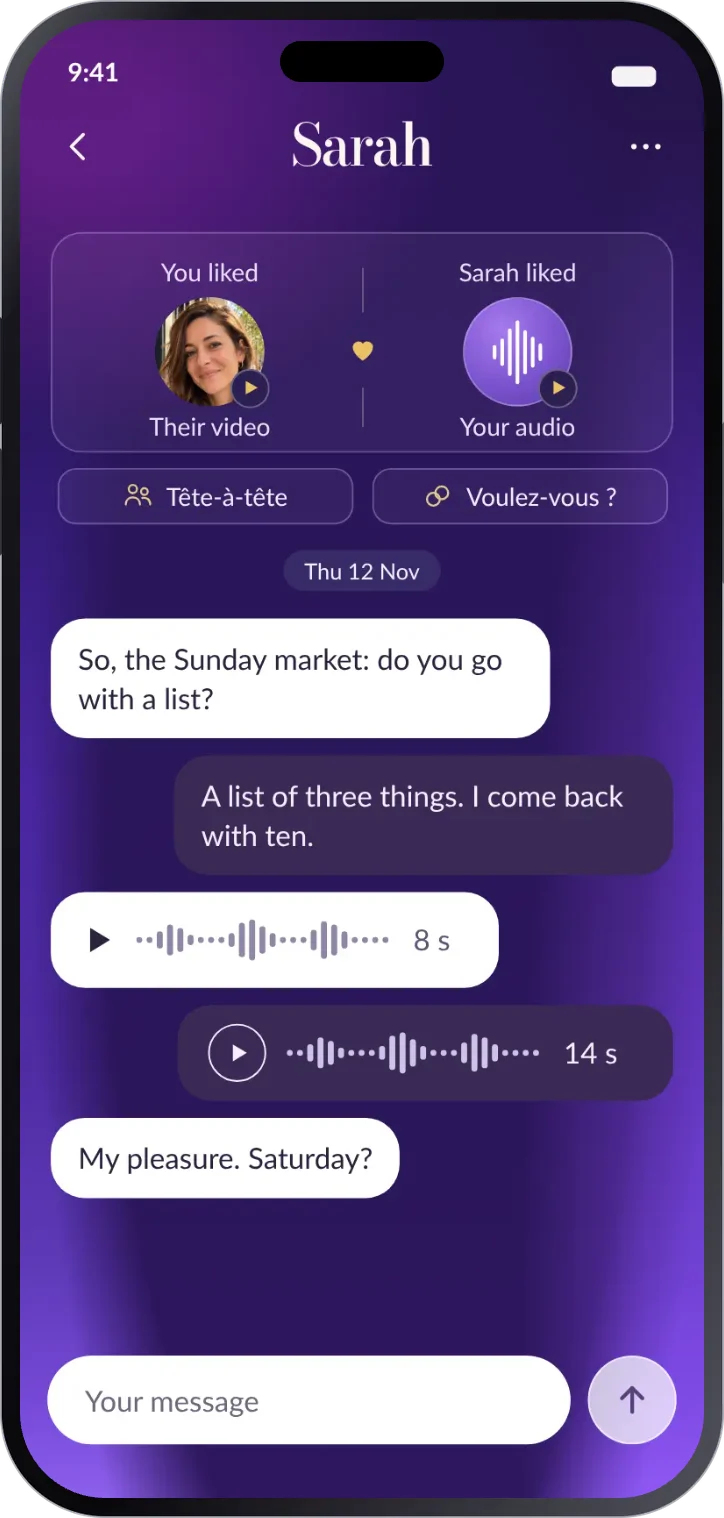
limits open conversations to three, for everyone. It’s a maximum, not a target to hit. The app shows no “online” status, no last seen and no count of the other person’s conversations.
This framework also comes with time limits: 24 hours to write the first message, then 48 hours to reply. A conversation also closes after seven days without any exchange. These rules organise conversations in the app; they don’t decide when you should meet.
Curious about
Frequently asked questions
Should you wait before replying to a message?
There’s no need to hold back a reply on purpose to seem less available. Reply when you feel like it and are able to, without expecting the other person to do the same.
Should you ask a question in every message?
No, you can also react to what they’ve said or share an anecdote. A detail can make them want to pick up the thread without needing a new question.
Does taking your time mean putting off the date?
No, you might want to meet from your very first messages. What matters is that you both want it, without pushing the other person to move faster than they’d like.